Gear ratio and wheel size: how they set speed and torque
, 1 min read
The same motor can be a quick hill-climber or a fast cruiser depending on gearing and wheel size.
The article below is in English. The summary and Listen are in your language.
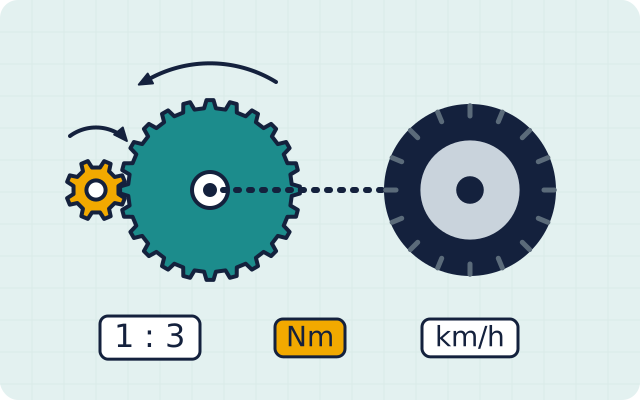
A motor's character on the road is shaped as much by gearing and wheel size as by the motor itself.
The trade-off
A lower gear (or a smaller wheel) multiplies torque, giving stronger pull and hill-climbing but a lower top speed. A higher gear (or larger wheel) trades some pull for a higher top speed. You cannot have maximum of both from one motor.
Choosing for the job
A cargo or hilly-route vehicle favours more torque; a highway cruiser favours a higher top speed. Designers pick the gear ratio and wheel size to match the vehicle's purpose.
Wheel torque = motor torque x gear ratio; road speed for a given motor speed rises with wheel diameter. Hub motors fix the 'gearing' by wheel size; mid-drives can use an actual gear.
When a vehicle feels wrong for its job, gearing and wheel size are often the reason, and the fix.