How a motor controller works
, 1 min read
The controller turns battery DC into the changing currents a motor needs. Here is the idea without the maths.
The article below is in English. The summary and Listen are in your language.
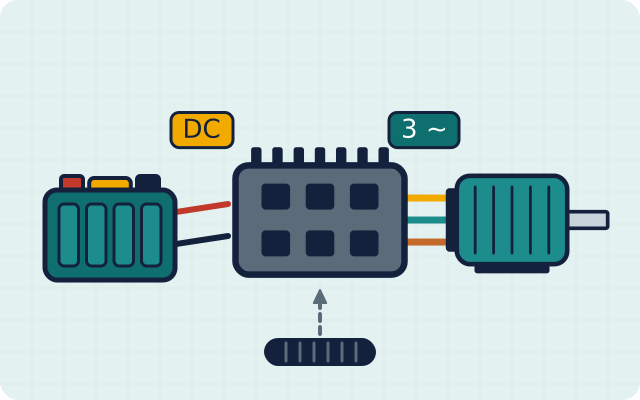
The battery gives steady DC, but a brushless motor needs currents that change in step with the rotor. The controller is the part that makes that happen.
Switching, many times a second
Inside the controller are power transistors that switch the battery on and off to each motor wire thousands of times a second. By choosing when and how long to switch, the controller builds the changing currents that spin the motor and set its torque.
Throttle to torque
When you twist the throttle, the controller reads it, checks how fast the rotor is turning (from hall sensors or by sensing the motor itself), and adjusts its switching to make the torque you asked for, within the limits the BMS allows.
The power stage is a three-phase inverter of six transistors. PWM sets the effective voltage; current sensors close a loop so the controller delivers the commanded torque and protects itself from over-current and over-temperature.
A controller that cuts out, overheats or throws codes is often reacting to a motor, sensor or battery problem rather than failing itself.