How public fast chargers work
, 1 min read
A DC fast charger is a small power station by the road. Here is what happens when you plug in.
The article below is in English. The summary and Listen are in your language.
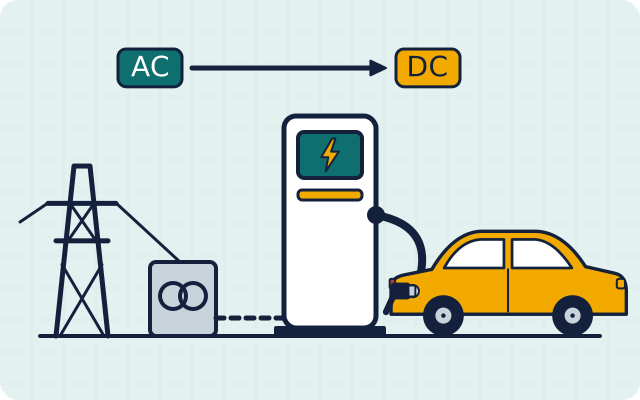
Pulling into a fast charger feels simple: plug in and wait. Behind the panel, a careful handshake is happening.
The handshake
When you connect, the charger and the car's BMS talk first. The car tells the charger its voltage and how much current it can safely take right now. Only then does the charger ramp up DC into the pack, adjusting as the BMS asks.
Why it slows down
As the pack fills and warms, the BMS lowers the allowed current, so the charge slows above about 80%. This protects the cells, which is why fast-charging the last stretch takes as long as the first big chunk.
The session is managed over a control line (and often a CAN or PLC link). The charger follows the BMS's current and voltage limits throughout; it never simply forces power into the pack.
For the best experience, plan to fast charge to around 80% and let the BMS do its job.