Insulation monitoring and high-voltage safety basics
, 1 min read
High-voltage EVs keep the battery isolated from the body. Monitoring and safe habits keep it that way.
The article below is in English. The summary and Listen are in your language.
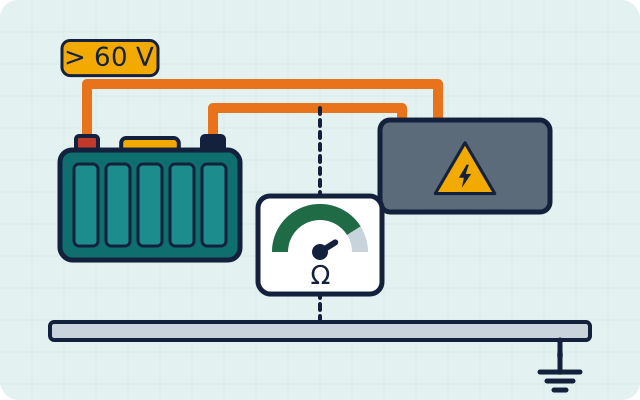
Above about 60 V, an EV is a high-voltage system and must be treated with respect. The key idea is isolation.
Isolated from the chassis
The battery's plus and minus are deliberately kept separate from the metal body, so touching one point does not give a shock. An isolation (insulation) monitor constantly checks that this separation is intact and warns if it drops.
Safe work habits
Before opening an HV system, switch it off, remove the service disconnect, and wait for the capacitors to discharge. Use insulated tools and gloves rated for the voltage, work one hand where possible, and never assume a pack is dead without measuring.
Interlocks cut HV if a cover is opened; the isolation monitor reports resistance between the HV lines and chassis, and flags a fault when it falls below a safe threshold (often a few hundred ohms per volt).
HV safety is a skill, not a guess. Our EV technician course covers the full safe-work procedure before any pack is opened.