Lithium-ion cell types: NMC, LFP and what the numbers mean
, 1 min read
The two chemistries you meet most in Indian EVs are NMC and LFP. Here is how they differ in range, life, safety and cost, and how to read a cell's code.
The article below is in English. The summary and Listen are in your language.
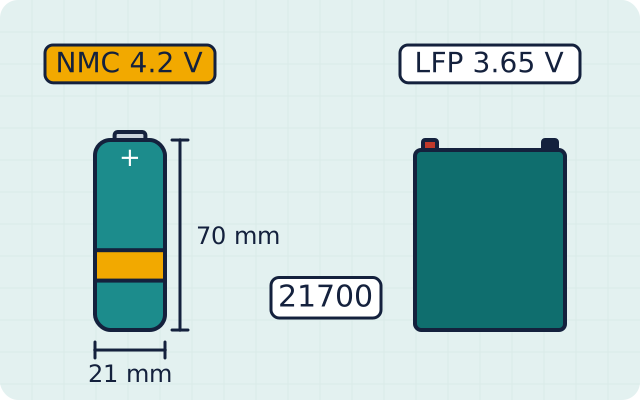
Not all lithium cells are the same. The chemistry inside decides how much energy the pack holds, how long it lasts, how safe it is and what it costs. In Indian EVs you mostly meet two families: NMC and LFP.
NMC: more energy, lighter
NMC (nickel-manganese-cobalt) packs more energy into the same weight, so vehicles get more range from a smaller, lighter pack. The trade-off is a higher full-charge voltage, a little less tolerance to heat, and a higher price because of the cobalt and nickel.
LFP: safer and longer-lived
LFP (lithium iron phosphate) holds a bit less energy per kilogram, so the pack is heavier for the same range. In return it runs cooler, is harder to push into thermal runaway, and lasts many more charge cycles. That is why most e-rickshaws, buses and value cars use LFP.
A full NMC cell sits near 4.2 V and an LFP cell near 3.65 V. LFP has a very flat voltage curve, which makes state-of-charge harder to read from voltage alone, so the BMS uses coulomb counting as well.
Reading a cell's code
A code like "INR21700" tells you the chemistry and size: I for lithium-ion, NR for NMC, then 21 mm diameter and 70 mm length. "IFR" or "LFP 32140" means an LFP cell 32 mm by 140 mm. Always match the datasheet of the exact cell to the BMS settings.