Regenerative braking explained simply
, 1 min read
An EV can slow down by turning the motor into a generator and putting energy back in the battery. Here is how.
The article below is in English. The summary and Listen are in your language.
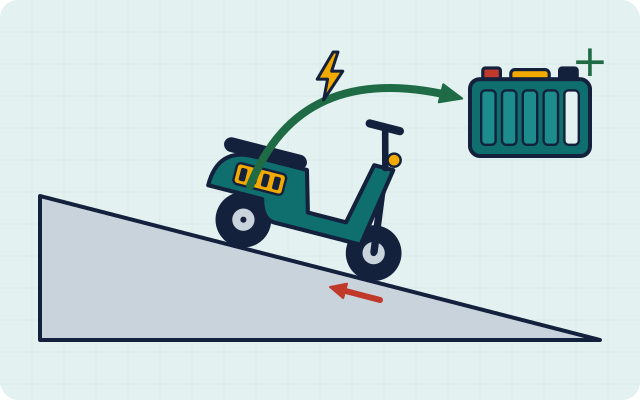
One of the neat tricks of an EV is that the motor can also be a brake that recovers energy.
Motor becomes generator
When you lift off or brake gently, the controller runs the motor in reverse as a generator. The wheels turn the motor, the motor pushes current back toward the battery, and that drag slows the vehicle while topping up the pack a little.
What it can and cannot do
Regen is strongest at medium speeds and fades near a stop, so friction brakes are still needed for firm or emergency stops. It cannot charge a full pack (there is nowhere to put the energy), so regen is limited just after a full charge.
Recovered energy is modest in city riding, often a few percent of range, but it also saves brake wear. The BMS caps regen current to protect the cells, especially when the pack is cold or full.
You can see energy flow both ways in the ride world below: ride down the flyover and the sparks turn green and run back to the battery.